


Mobile Site Satisfaction Leads to More Social Media Sharing, J.D. Power Reports
When car shoppers using a smartphone have a satisfying online experience with an automotive manufacturer or third-party automotive site, they are more likely to share vehicle information on social media, according to a new study.
WESTLAKE VILLAGE, Calif. — Auto shoppers using a smartphone are more likely to share vehicle information on social media when they have a satisfying online experience with an automotive manufacturer (OEM) or third-party automotive site, according to the J.D. Power 2014 Automotive Mobile Site Study.
The study, now in its third year, has been redesigned to capture details on content and tool usage while measuring what content is most effective on OEM and third-party automotive websites on a smartphone during the vehicle-shopping process. The study examines website usefulness across four key measures (in order of importance): information/content, navigation, appearance and speed. Satisfaction is calculated on a 1,000-point scale.
One-third (33%) of shoppers said they “definitely will” share vehicle information via social media after an exceptional experience (overall scores of 901-1,000), compared with only 3% of shoppers after a poor experience (scores of 500 and lower). Among shoppers using an OEM or third-party automotive website, 45% said they either “probably will” or “definitely will” share information via social media about a vehicle they researched.
“When vehicle shoppers have a positive experience on an OEM or third-party site, they are more likely to share the content they find useful or interesting with others,” said Arianne Walker, senior director of automotive media and marketing at J.D. Power. “This provides auto brands a great opportunity to get their content out in front of consumers through social media. The challenge is not only having great content to encourage sharing, but also ensuring that consumers have an outstanding experience no matter what site they are accessing on their smartphone.”
Shoppers who share vehicle information on social media are more likely to share imagery, such as exterior images (48%), interior images (42%) and videos (40%) than other less visual content, such as payment/lease (18%) or dealer information (25%). And use of videos, interior 360° and exterior 360° tools has a significant positive impact on satisfaction among smartphone shoppers when researching how a vehicle looks on both OEM and third-party websites.
When researching vehicle information, shoppers who access an OEM website on a smartphone are much more likely to use a build and price tool (43%) than those who shop on third-party sites (30%). However, vehicle shoppers accessing a third-party website on a smartphone are more likely to use an inventory search tool (36%) than those on an OEM site (32%).The largest gap (90 points) in satisfaction between OEM (806) and third-party sites (716) is in appearance of the website.
Among OEM websites, Acura ranks highest with a score of 811. Following Acura in the rankings are Cadillac (803), Porsche (802) and Chrysler (801). Among third-party automotive sites, U.S. News Best Cars ranks highest (771), followed by Cars.com (749), Kelley Blue Book (728) and Edmunds.com (726).
The 2014 Automotive Mobile Site Study examines the features and content of automotive manufacturer and third-party mobile websites and their usefulness in the vehicle-shopping process. The study includes 11,451 evaluations of automotive mobile websites from vehicle shoppers who intend to purchase or lease a vehicle within the next two years. The study was fielded in July and August 2014.
More Digital
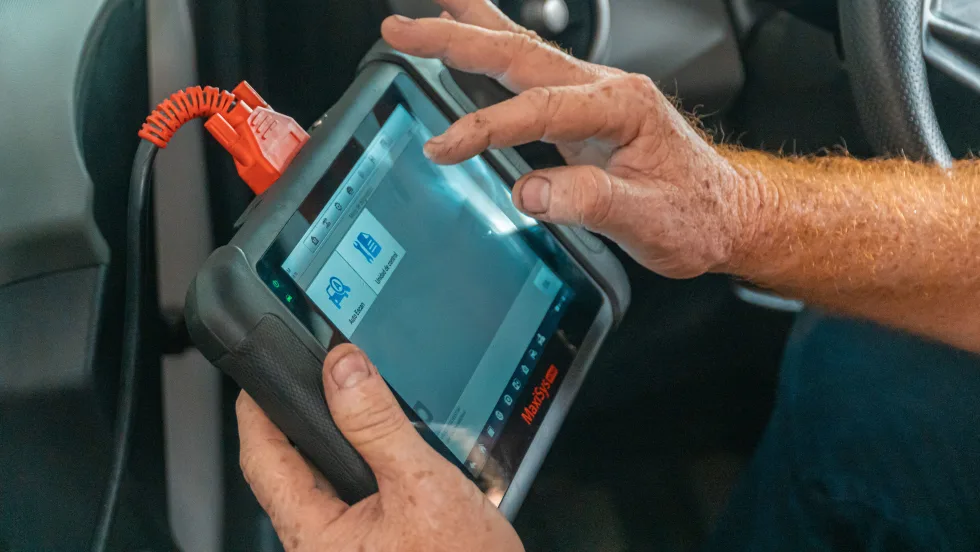
Fixed-Ops Automation Can Help Dealerships Stand Out
Technology turns everyday service repairs into lasting customer loyalty and dealer profitability.
Read More →
AI and the Auto Dealer
These are risks you can’t ignore as the technology becomes more and more of a presence in the auto retail environment.
Read More →
Data Drives Success
Dealerships that make decisions based on data rather than gut instinct or experience have a leg up on their competitors, according to a recent survey.
Read More →
AI: Facilitator, Not Fixer, in F&I
The dealerships that thrive in the years ahead will be those that embrace technology while continuing to invest in the people who make customer interactions count.
Read More →
Simple But Effective Hacking Surges
Data from the past year at U.S. auto dealerships finds that email and identity phishing are growing threat sources that can dispense with malware by exploiting trust.
Read More →
The Future of Car Dealerships
Artificial intelligence is reshaping the service-drive experience and will help retailers stay competitive.
Read More →
Structure Leads to Optimized Auto Listings
As the average car-buying journey has shifted to a blend of digital and retail, a dealership’s vehicle listings must be optimized to answer shoppers’ questions clearly and accurately.
Read More →
Real Intelligence
AI, though it presents many opportunities for productivity, efficiency and more, isn’t a one-for-one stand-in for people. It can augment human capital but not replace it altogether.
Read More →
Zurich Launches Advisor IQ for F&I Manager Coaching
The new platform uses real transaction data and artificial intelligence-driven insights to help car dealerships improve consistency and performance.
Read More →
F&I in the Digital Age
Digital retailing has not made the F&I manager obsolete. If anything, it has revealed how valuable the role can become when technology is used correctly.
Read More →